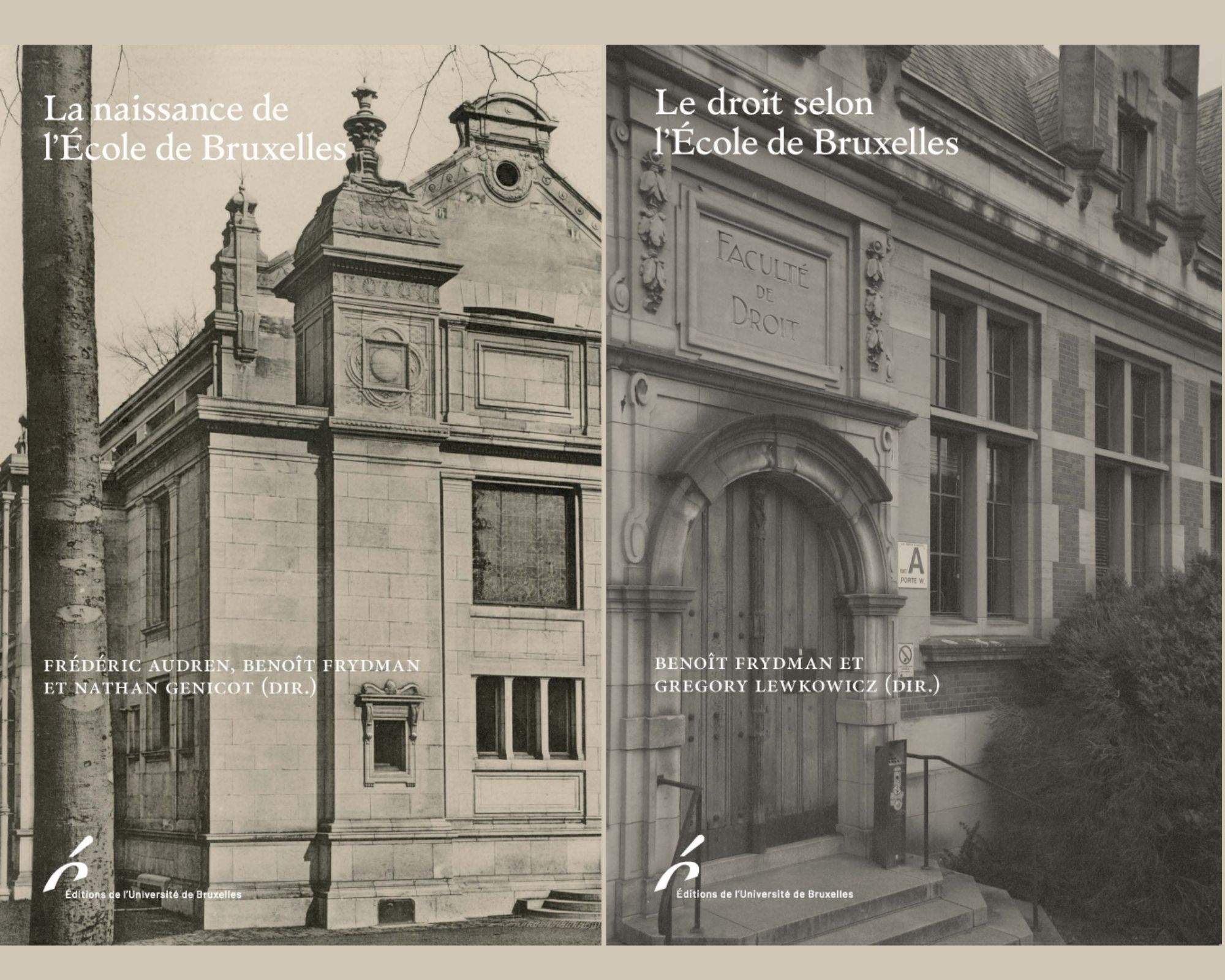
The Brussels School

The Brussels School is an internationally recognised school of thought in legal philosophy and legal scholarship. It is distinguished by its practical and transdisciplinary orientation, its pragmatic method, and its engagement with social life and its transformations.
Its history spans three successive periods. The School emerged in the late nineteenth century from a positivist and modernist inspiration that led its early members to initiate the sociological turn in law, philosophy and the human sciences. The Brussels School played a leading role in the development of sociology in Belgium. After 1945, a new generation of the School, composed mainly of legal scholars alongside philosophers and logicians and united around the guiding figure of Chaïm Perelman, made a major contribution to the argumentative turn in law and philosophy. In doing so, it enabled the development of argumentation as a discipline. Since the 1990s, legal scholars and philosophers of law associated with the Brussels School have renewed and applied its methods to the global turn. Their work examines the major consequences of globalisation for political and legal institutions and the ongoing transformations of law and normativities more generally.