
This paper analyses the transposition into EU law of the well-known margin of appreciation concept as a tool to accommodate diversity. From the example provided by the European Court of Human Rights case law, the use of this technique by the Court of Justice of the European Union in the field of fundamental rights protection is discussed. The analysis is conducted by exploring the different legal context in which the Luxembourg court operates, as illustrated by the functions that it performs, both as a supreme and a federal constitutional court. Beyond some common elements, the different perspective of the Luxembourg court is reflected in some distinct features in the use of the margin of appreciation, as for instance the impact on the scope of the margin of appreciation of factors such as the existence or absence of a European consensus in the field, or the degree of harmonisation provided by EU law on the level at which Member States must protect the fundamental right concerned. Despite theses differences, there is a similar approach as compared to the use of margin of appreciation concept by the Strasbourg court, by the interconnection of the notions of consensus, harmonisation and subsidiarity in EU law. Given this background, this paper argues that the use of the margin of appreciation by the Court of Justice of the European Union can also be considered as a tool to accommodate diversity, in that sense that its use provides a balance between the respect of the EU constituent and legislator choices and those of the national authorities.
Accueil >
Transposing the margin of appreciation concept into EU law
Publications récentes
-

Exploring the boundaries of AI regulatory sandboxes under the AI Act: Flexibility and real-world…
Nathan Genicot has published with Thiago Guimaraes Moraes an article in Cambridge Forum on AI: Law and Governance entitled “Exploring… -

Research Handbook on European Anti-Discrimination Law
Edited by Colm O’Cinneide (University College London), Julie Ringelheim (UCLouvain) and Iyiola Solanke (University of Oxford), this Research Handbook (Edward… -

Qu’est-ce qu’une femme ?
Le 16 avril 2025, la Cour suprême du Royaume-Uni a jugé que « les termes ‘femme’ et ‘sexe’ dans la loi… -
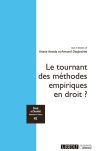
Le tournant des méthodes empiriques en droit ?
Frédéric Audren Audren a rédigé la conclusion générale du volume intitulé “Le tournant des méthodes empiriques en droit ?” dirigé…